-
Final Project Proposal: Economic Development in the Russian Empire, 1700-1913
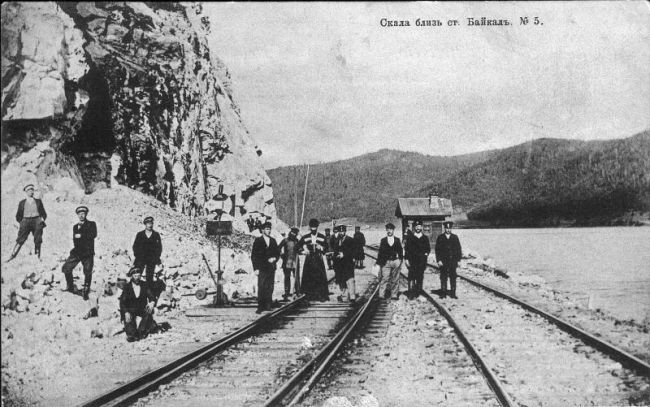
Trans-Siberian Railway, c. 1900 RUSCORP is a database of corporations in the Russian Empire founded between 1700 and 1913. The project of Thomas C. Owen at Louisiana State University, the data was compiled through the analysis of corporate charters granted by the Russian government from the time of Peter the Great until the outbreak of World War I and subsequent collapse of the Russian Empire. The database is composed of fifty-two machine-readable text files, divided into six separate file categories analyzing 4,539 corporations, 14,245 founders, and 5,243 managers. This information documents the rise of capitalism in Tsarist Russia, tracking its progress through Russia’s industrialization in the late 19th century and the demise of the empire in the early 20th century.
-
Final Project Proposal: Mapping the Attica Prison Uprising Collections at the New York State Museum
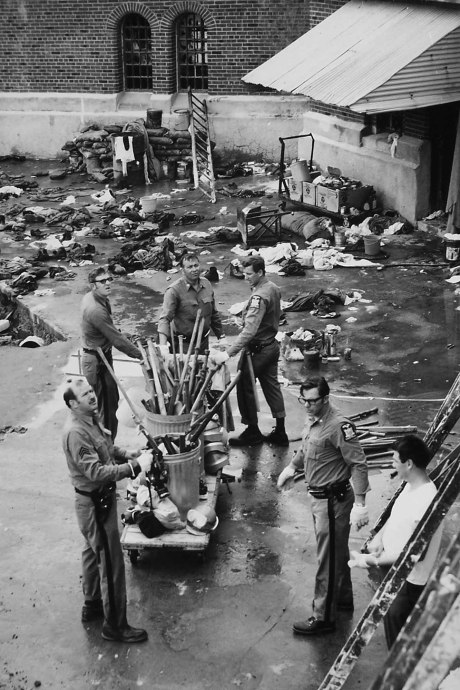
New York State Police investigators collect evidence in D Yard at Attica State Correctional Facility on September 13, 1971. Courtesy of the New York State Archives -
Final Project Proposal: Trans-Atlantic Slave Trade
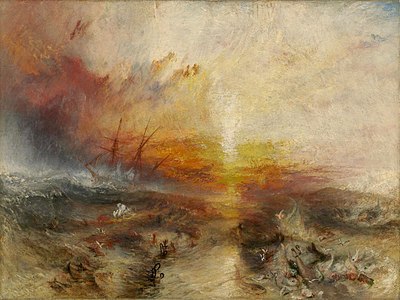
J.M.W. Turner’s The Slave Ship, depicting the “Zong Massacre.” -
-
Final Project: The Evert Wendell Files
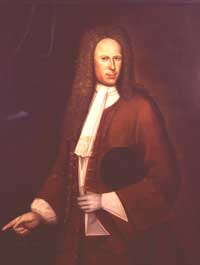
Evert Wendell: The Man with No Eyebrows Data Critique
The Evert Wendell account book data details the “fur” trade between Wendell and Canadians/Native Americans. The dates range from the late 1690s to the early 18th century. Trade ranges from Canadians to people in the Catskill region in lower New York. This includes a variety of Native Americans such as the Seneca and Mohawk. It cannot describe the trade other than the details written down in Wendell’s account book. Those features, when translated into the spreadsheet, are as follows: name, male, female, gender, tribe, affiliation, date, trade good, fur, town, and the amount of fur/guilders received. This particular dataset includes about 1600 entries. Many of the names given are offered in relation to another person (i.e. mother of D’caiendanharij). This dataset was taken from Wendell’s account books and translated into a spreadsheet by Dr. Kane. It is divided for clarity, including three rows regarding gender. If this were my only source, I would lack the context of the trade itself that a secondary source could provide. Additionally, I might be lost on the geographic location of the trade, who Evert Wendell was, or what a marten was.
-
Final Project Proposal: DPLA Adirondack Data set
My data set is composed of entries pulled from the Digital Public Library of America relating to the search term “Adirondacks.” Each row contains the link to an image, what organization contributed the image, the subject of the image, the image’s original creator, the medium, and a description of the image’s content. Not every entry contains all of this information. The images come from many sources, but the majority of the content comes from the Adirondack Museum and the New York Public Library.
-
City of Albany Census Data, 1850 to 1940
The Census records dataset contains information on sex, age, race, birthplace, mother’s and father’s birthplace, literacy, occupation, and relationship between a person and the head of household if one exists. The US Census Bureau categorizes all people who are not in housing units as living in group quarters. Examples of group quarters include prisons, missions, and college housing. If a person on the census is not part of a household, their group quarter is listed. Information for these are the type, funding, and details of the group quarter.
-
-
International Pirate Trials
International Pirate Trials
Data Critique
This data set is created from the Law Library of Congress’ collection of trial records on piracy (https://www.loc.gov/law/help/piracy/piracy_trials.php). The documents range between 1696-1905. As it is still in creation (by me), the specifics of what is recorded is subject to change. Currently, the dataset identifies: the name of the person on trial, the date and location of the trial, where they are from (if known), the charges against them and the outcome of the trial. It also includes the ship, if relevant and any extra notes that seem pertinent.
-